Interview
Here you can an interview with CM von Hausswolff on a Swedish website, although the interview is conducted in English
Touch Radio 74 | CM von Hausswolff
28.01.12 - Live Last Night - 23:54 - 192 kbps

Photo: Dave Knapik
Recorded live at Fim de Semana Especial n.º 3, Teatro Maria Matos, Lisbon, 27th January 2012.
Subscribe to the TouchPod podcast of TouchRadio via the iTunes Music Store
Play CM von Hausswolff "Live Last Night"
www.cmvonhausswolff.net
Touch.30
Worm Eats Bear | Merge Festival, London, 20th October 2011
Worm Eats Bear - a Special Evening of performances by The Tapeworm as part of the Merge Festival - The Bear Pit, London SE1, 20.x.11
Announcing a special FREE evening of Bankside performances curated by The Tapeworm, as part of the Merge Festival.
Venue:
The Bear Pit
Bear Gardens
London SE1 9EB
Exhibition featuring work by Savage Pencil and Vicki Bennett: Friday 21st – Sunday 23rd October 12 – 6pm.
Running order
Side One:
Michael Esposito
von Hausswolff/Harding
Joachim Nordwall plays "Ignition"
BJNilsen
People Like Us [video]
Interval
Side Two:
Ken Hollings
Edwin Pouncey & Peter Hope-Evans
BJNilsen
Zerocrop
People Like Us [video]
"Enchaos" - all artists, altogether, almost…
CMvH on BBC Radio 3 | 31st March 2011

800 000 Seconds In Harar | 7th March 2011

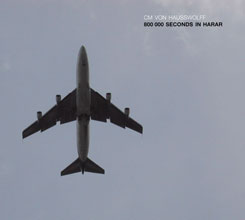
CM von Hausswolff - 800 000 Seconds in Harar
[Touch # TO:82]
CD digipak - 40:39 - 4 tracks
Retail release date: 14th March 2011
Download release date: 7th March 2011
Track listing:
Track A: Day and Night 27:14
1. Day
2. Night
3. Alas! [You can hear an extract from this track here]
Track B
4. The Sleeper in the Valley 13:32
CM von Hausswolff says: "I was approached by my old friend and Radium 226.05 colleague Ulrich Hillebrand, now director of Angered Theatre in Göteborg. He informed me that there was a new play in the process of being written by author and theorist Michael Azar called "Jag är en annan" (I is another) stemming form the famous letter written by Arthur Rimbaud in his youth. The play uses Rimbaud's life from being a young poet in Charleville ending with him being the trader in Harar, Ethiopia. Hillebrand asked me if I was willing to compose the music to this play. I accepted. I told Hillebrand that I needed to use material that had something to do with Rimbaud's life and as he had connections in Ethiopia and in the small city of Harar he said: why don't you go to Harar for 10 days and see what you can find?
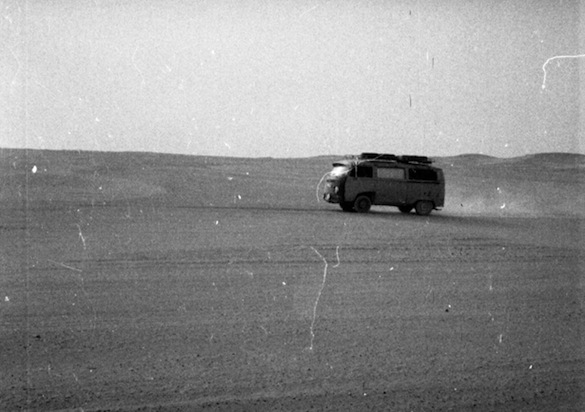
So I went to Addis Ababa where a guy was waiting for me and drove me the 10 hours beautiful ride to Harar. I made recordings and looked for other useful material.
There are 2 tracks. On the first track, which consists of three "parts" I have used material from Harar. The long dronic sounds are taken form an instrument that I, after searching for days, bought in Harar - it's called a "krar" and is a string instruments (it's quite clear that I have used a string instrument- also if you study Ethiopian music you came across the name of Saint Yared and he was the first to construct a notation system for music... much earlier than the Europeans). As I could not really master the actual playing of this instrument, I bought a bow for a violin and some rosin and with this I got one good tone out from this krar. Then the computer helped me to sort the modes and pitches out. On this piece there also two location recordings: the first one you hear is a recording I did outside Harar on a hill where there are next to no car sounds or other machine sounds - just the wind, insects, some kids and that (I wanted this recording to be more or less timeless or at least 19th century and forward... The second location recording was done in the night in my hotel, where I woke up one night and became fascinated by the leaking taps in my bathroom so I decided to records this.
On the second there are only oscillators used ... several of them ... AND using one low pitch oscillator I ran a sound filtered through. This sound is the low "rhythm" you can hear, and it's a low pitched morse code signal... and the text is the famous poem Rimbaud wrote in his youth called Le Dormeur Du Val (The Sleeper in the Valley). This poem is a beautiful text starting off in the nature, where a person is sleeping in the grass. Slowly Rimbaud zooms in and we read that it's a soldier and at the very end we are told he has two red wounds on his chest - the guy is dead! ."
Arthur Rimbaud lived in Harar from 1884 until shortly before his death in 1891.
This is Carl Michael von Hausswolff's first album for Touch, but the connection goes back many years, of course. Carl Michael von Hausswolff was born in 1956 in Linköping, Sweden. He lives and works in Stockholm. Since the end of the 1970s, Hausswolff has worked as a composer using the tape recorder as his main instrument and as a conceptual visual artist working with performance art, light and sound installations and photography. You can read a full biog on his website here.
Reviews of this album can be found here
Activities Autumn 2010
exhibition: KREV consulate, Museo de la Ciudad, Queretaro, Mexico (with Leif Elggren)
5/11 - 30/11 2010
exhibition and concert: Darker Then Night, Casino Metropolitano, Mexico City, Mexico
28/10 - 12/12 2010
concert: Lausanne Underground Film and Music Festival, Lausanne, Switzerland 20/10
exhibition: ARTifariti, Tifariti, West Sahara
16/10 - 30/10 2010
theatre music: Jag är en annan (I am another) by Michael Azar
premiere at Angered Theatre, Göreborg, Sweden 15/10 2010
concert: Chromatologies, Rotherham, United Kingdom 24/9 2010
concert: Dis-patch Festival, Serbia 9/10 2010
exhibition: The Night Pleases Us, October Salon, Belgrade, Serbia (with Thomas Nordanstad)
6/10 - 9/11 2010
exhibition: Ekaterinburg Industrial Biennial for Contemporary Art, Russia
9/9 - 10/10 2010
exhibition: Svensk Konceptkonst (Swedish Conceptual Art), Kalmar Art Museum, Kalmar, Sweden
4/9 - 14/11 2010
RED
6 May - 30 May 2010
Opening 6 May 5-8pm
Galleri Niklas Belenius is pleased to present Carl Michael von Hausswolff´s second solo exhibition at the gallery.
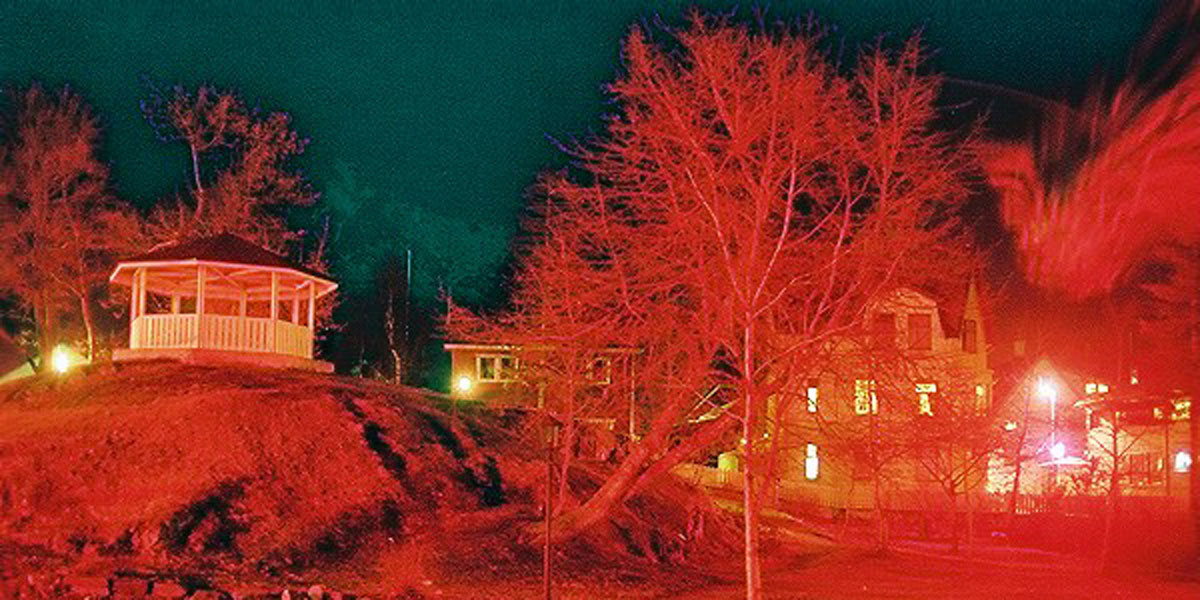
For the past several years Hausswolff has continued to explore the possibility of exposing different architectural and topographical settings with red light. The exhibition brings together five photographs from his Red series.
By photographing different settings using high-voltage red light, the image itself, or rather the subject of it, emanates from the means by which it is conveyed. The subject in question becomes transformed by its color bath into a real-world monochrome. The image thus becomes a painting in its own right through the monochromatic use of color where the transformative power of light and dark creates a painterly texture and nuance. The monochromatic surface also becomes an examination of changing values across the surface suggesting that repetition can in fact never produce the same meaning.
Even though the photographs offer no reference other than the viewer´s own, Hausswolff´s work is always rooted in a special relationship with the place itself. Red Dawn (2009) is portraying the ruins of German military leader Hermann Goering´s hunting lodge in the Kaliningrad area, Russia, (formerly Königsberg, Eastern Prussia). Through the forest the ruins of the former lodge is barely discernable, as the structure has slowly been erased by nature. By rewriting the history of a particular site brought to life with the color red, the image itself questions history´s disturbing sense of permanency. The overall tone is that of positive reflection on the ephemeral nature of existence and absence but one that never exceeds into nostalgia.
In one of the other recent photographs in the series, Red Cochineal (2007) several Nopal cacti are illuminated in the Mexican countryside. Here the almost invisible female shield louse, the cochineal, works as the extended narrative of the picture. The insect is used to produce Crimson dye; a strong, bright, deep red color that was particularly sought after in Central America in the 15th century by the Spaniards for coloring fabrics. The parasite became an important export product during the colonial period and contributed to the enslavement of the indigenous population by the colonialists.
The picture is the resulting encounter between something that is transient in its contingency, yet charged with its own inherent history.
In addition, the newly published book RED (1999-2010) is released in conjunction with the exhibition and includes all red works in the photographic and installation series by Hausswolff, as well as a text written by Daniel Birnbaum.

Red Dawn (Krajna Lesnje 2009) # 4, c-print, 2009
GALLERI NIKLAS BELENIUS
ULRIKAGATAN 13
115 23 STOCKHOLM
+46 (0) 8 662 82 07
+46 (0) 708 55 68 56
Open: Wed-Fri 12-6pm, Sat 12-4pm
www.niklasbelenius.com
niklas@niklasbelenius.com
BBC Radio 3: Cut & Splice performance
On Saturday 4th July, BBC Radio 3's "Hear and Now" features music from 2009's Cut & Splice: Living Rooms festival, from Wilton's Music Hall in London. This festival of electronic music and sound art, co-promoted by Hear and Now and the Sound and Music organisation, features work inspired by and utilising the domestic environment.
The broadcast includes a recording of Carl Michael von Hausswolff and John Duncan in duet, creating an intense electroacoustic climax to the festival.
Further information at bbc.co.uk
birdcage

Touch Presents, as part of the Ether Festival 2009
Queen Elizabeth Hall, London, 21st April 2009 - Touch presents, as part of the Ether Festival 2009:
Fennesz [AT]
Rosy Parlane [NZ]
CM von Hausswolff [SE/KREV]
encore
You can now buy tickets for Touch Presents, as part of the Ether Festival 2009.
More about Ether 2009
Book tickets online